
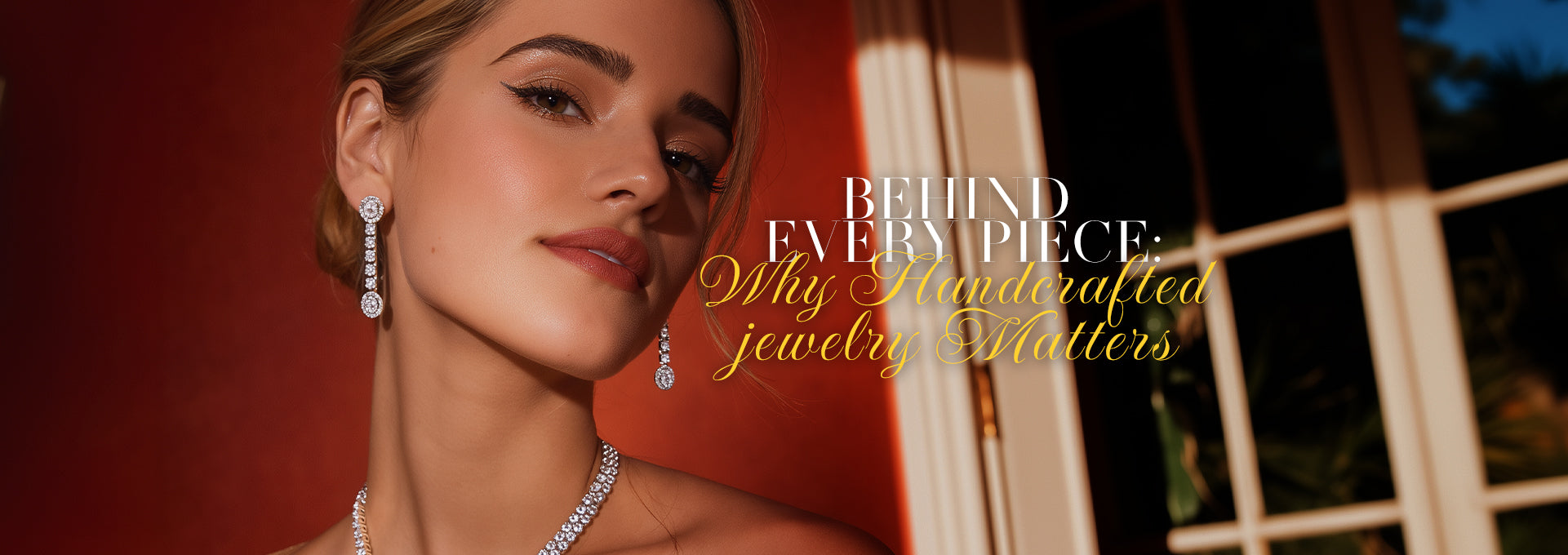
Behind Every Piece: Why Handcrafted Jewelry Matters
Mass produced jewelry looks fine in photos. Handcrafted pieces reveal their quality when you hold them. When you see how light moves through them. When you wear them for years and they still look perfect.
For Valentine's gifts, this difference matters. You're not just buying something pretty. You're choosing something meant to last, to be worn constantly, to become part of someone's story.
Here's what actually goes into creating jewelry worth giving.
From Concept to Reality
Every handcrafted piece starts as an idea. A sketch. A vision of how metal and stone should work together.
Designers consider proportions, wearability, and how the piece will move on the body. They think about who might wear it and how it will integrate into real life. This is fundamentally different from designing for manufacturing efficiency.
Custom and handcrafted pieces prioritize beauty and function over production speed. Each decision serves the final wearer, not the assembly line.
For Valentine's jewelry, this intentionality shows. The piece feels considered rather than generic. Thoughtful rather than mass produced.
The Digital Model Stage
Modern jewelry making combines traditional craft with technology. Designers create 3D computer models before touching physical materials.
These digital models let them perfect proportions, test how stones will sit, and visualize the finished piece from every angle. They can adjust details that would be impossible to change later.
This stage prevents problems. A stone setting that looks good in sketch might not secure the diamond properly. A bracelet design that seems elegant might catch on clothing. Digital modeling catches these issues before metal gets cut.
The result is jewelry that works as well as it looks. Function and beauty integrated from the start.
Physical Prototyping
Digital models become physical prototypes, usually in wax or resin. This is where designers can hold the piece, test its weight, see how it moves.
Some issues only reveal themselves in three dimensions. A ring that looked comfortable in computer model might press oddly on the finger. Earrings that seemed balanced might hang wrong.
Prototyping lets craftspeople refine before committing to precious metals. They adjust, test again, perfect the design. This iteration creates pieces that feel right, not just look right.
For Valentine's gifts, this refinement matters. The jewelry won't just photograph well. It will be comfortable enough to wear daily.
Lost Wax Casting Process
Many handcrafted pieces use lost wax casting, a technique thousands of years old that still produces the best results for complex designs.
The wax model gets embedded in investment plaster. Heat melts the wax out, leaving a perfect cavity. Molten gold pours into this cavity, taking the exact shape of the original model.
This process captures incredible detail. Textures, curves, precise dimensions all transfer perfectly. It's why handcrafted jewelry can achieve complexity impossible with other methods.

14K Yellow Gold 0.40ctw Baguette & Rounds Hanging Earring at $2,570 shows the precision casting enables. 14K yellow gold with 0.40CTW baguette and round diamonds in elegant hanging design. The intricate arrangement of different diamond shapes requires expert casting to secure each stone properly. A Valentine's gift that demonstrates true craftsmanship.
Mass produced jewelry simplifies designs to suit automated processes. Handcrafted pieces embrace complexity because skilled hands can execute it.
Hand Fabrication Techniques
Not everything gets cast. Some pieces are fabricated entirely by hand from sheet and wire metal.
Craftspeople cut, shape, solder, and form precious metal into the desired design. This technique offers different possibilities than casting. Cleaner lines. Different textures. Specific structural qualities.
Fabrication requires deep understanding of how metals behave. How much heat to apply. Where to reinforce. How to create joints that are invisible but strong.

14K White Gold 3.44ctw Diamond Linear Dangling Earring at $6,940 demonstrates sophisticated fabrication. 14K white gold with 3.44CTW diamonds in dramatic linear design. The clean lines and secure diamond settings require expert metalworking. Each element carefully constructed and joined. A Valentine's gift that showcases exceptional technical skill and modern elegance.
This is jewelry as craft. Each piece unique even when following the same design, because human hands execute it slightly differently every time.
Stone Setting Expertise
Setting diamonds and gemstones requires specialized skill. Stones must be secure enough to last decades but set in ways that maximize light and beauty.
Different stones need different setting techniques. Prong settings let maximum light enter. Bezel settings offer protection. Channel settings create smooth lines. Pavé settings require extreme precision to place tiny stones perfectly.

14K White Gold Fancy Front Open 1.31ctw Diamond Bangle at $3,815 shows complex stone setting work. 14K white gold with 1.31CTW diamonds set in intricate pattern. Each stone individually placed and secured. The open design means every setting is visible, requiring perfect execution. A Valentine's gift that represents hours of expert work.
Stone setters work under magnification, using tiny tools to position and secure each diamond. One mistake ruins the stone or the setting. No room for approximation.
This expertise can't be automated. It requires years of training and steady hands. It's why handcrafted jewelry maintains stone security that mass produced pieces can't match.
Finishing and Polish
After construction and stone setting comes finishing. This stage determines how the piece feels and looks in subtle but important ways.
Craftspeople remove tool marks, perfect curves, ensure smooth edges. They decide which surfaces get polished to mirror finish and which get textured for contrast.
Finishing affects how light plays across the metal. High polish creates bright reflections. Brushed finishes offer subtle glow. The combination creates depth and visual interest.
This is where jewelry goes from technically correct to beautiful. The details most people never consciously notice but definitely feel when holding the piece.
Quality Control That Actually Controls Quality
Handcrafted jewelry undergoes human quality control. Someone examines every detail, checks every stone, tests every joint.
They verify:
-
Stone security in every setting
-
Smooth finish without sharp edges
-
Proper weight and balance
-
Structural integrity at stress points
-
Perfect polish and finish quality
Mass produced jewelry gets spot checked at best. A percentage of pieces get examined, not every single one. Defects slip through because human inspection doesn't scale to mass production volumes.
For Valentine's gifts, this quality control matters. You want confidence that the piece will perform perfectly, not hope it's one of the good ones.
Why Handcrafted Takes Longer
Making jewelry by hand requires time. Lots of time. This isn't inefficiency. It's what creating quality requires.
Stone setting alone might take hours for a single piece. Finishing and polishing requires patience and attention to detail that can't be rushed. Each step demands focus and skill.
People sometimes ask why handcrafted jewelry costs more or takes longer to produce. This is why. The alternative is compromising quality for speed. Accepting good enough instead of insisting on excellence.
For Valentine's jewelry meant to last decades, the time invested in creation matters. It's the foundation of longevity and beauty.
Signs of Handcrafted Quality
You can often identify handcrafted jewelry by subtle indicators:
- Weight distribution feels balanced. The piece sits naturally when worn, not fighting gravity or pulling wrong.
- Stones are secure without visible gaps. Settings hold diamonds firmly with metal meeting stone perfectly.
- Edges are smooth and comfortable. No sharp points or rough spots that catch on clothing or skin.
- Finish is consistent and deep. Polish reaches into corners and details, not just obvious surfaces.
- Details make sense structurally. Every element serves both form and function.
These qualities come from human attention to the specific piece, not algorithms optimizing for production speed.
Emotional Value of Craftsmanship
Handcrafted jewelry carries different emotional weight than mass produced pieces. Someone spent hours creating this specific item with skill and attention.
For Valentine's gifts, this dimension adds meaning. You're not giving something that rolled off an assembly line. You're giving something a craftsperson made with expertise and care.
The recipient might never see the workshop or meet the maker. But they'll feel the difference in quality, durability, and beauty. They'll know this was made properly, meant to last.
That's the real gift. Not just jewelry. Jewelry created with skill and intention, meant to become part of someone's story.
Investment in Longevity
Handcrafted jewelry costs more initially but delivers better value long term. Proper construction means repairs are rare. Quality materials mean the piece doesn't degrade.
Mass produced jewelry often requires replacement within years. Stones fall out. Plating wears off. Joints fail. The "savings" from lower initial cost disappear when you're buying replacements.
Handcrafted pieces last generations when cared for properly. They become heirlooms. The price per year of wear makes them more economical than cheaper alternatives that need replacement.
For Valentine's gifts, this longevity matters. You're choosing something meant to last as long as the relationship. Something that can be worn daily for decades without falling apart.
What Makes It Worth Giving
The best Valentine's gifts reflect genuine thought and care. Handcrafted jewelry embodies both.
Someone designed this piece considering how it would be worn. Craftspeople executed the design with expertise and attention. Quality control ensured it met high standards. Every step prioritized creating something excellent.
When you give handcrafted jewelry, you're giving all of that. The skill. The time. The care. The intention.
Mass produced jewelry says "I bought something." Handcrafted jewelry says "I chose something made properly, meant to last, worthy of you."
That's the real difference. Not just how it's made. What the making process says about how much the gift matters.
Ready to give Valentine's jewelry made with true craftsmanship? Explore our handcrafted collection at TemiB, or visit our showroom to see the quality in person.
Explore Collection | Book a Consultation