
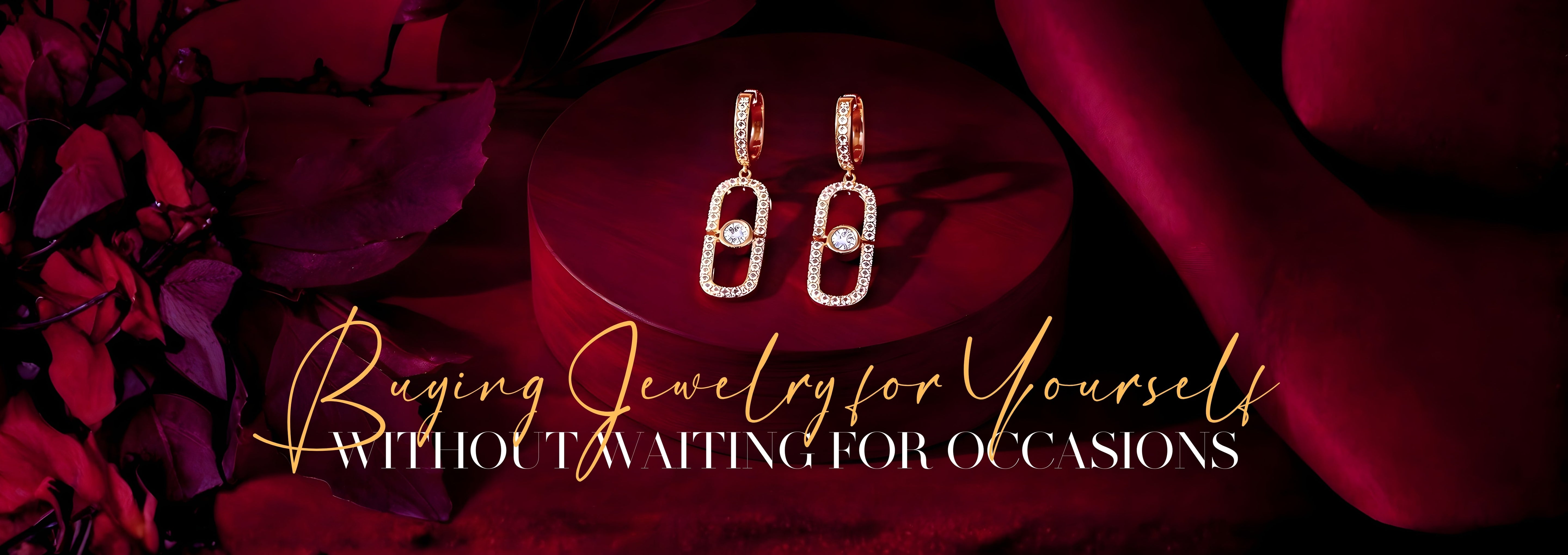
Buying Jewelry for Yourself Without Waiting for Occasions
Women buy roughly one third of all fine jewelry sold. Not as gifts. For themselves. Yet many still hesitate before self-purchasing, waiting for birthdays, promotions, or someone else to choose for them.
The economics of this hesitation are interesting. The same person who buys $800 shoes without deliberation will agonize over a $1,500 ring. She'll research for months, revisit multiple times, and still question whether she really needs it.
Understanding when buying for yourself makes sense removes this barrier. Some purchases are clearly worth it. Others should wait. Here's how to evaluate.
The Cost Per Wear Calculation
Quality jewelry gets worn for decades. A $2,000 piece worn weekly for twenty years costs roughly $2 per wear. A $200 piece worn twice and forgotten costs $100 per wear.
This inverts typical purchase logic. Expensive jewelry that gets constant use becomes the better value. Cheap jewelry purchased impulsively becomes wasteful.

14K Yellow Gold Diamond Link Hoop Earring at $1,980 demonstrates this principle. 14K yellow gold with diamonds in linked hoop design. Worn daily for years, the cost per wear drops to pennies. These become foundational pieces that work with everything, creating value through constant use rather than occasional special wear.
The calculation applies to all purchases but especially to jewelry since quality pieces literally last lifetimes. Cheap costume jewelry breaks, tarnishes, and gets replaced. Fine jewelry gets worn indefinitely.
When evaluating self purchase, estimate realistic wear frequency. Pieces you'll wear weekly justify higher prices. Pieces for rare occasions should cost less regardless of how beautiful they are.
When to Buy Without Waiting
Certain situations clearly justify self purchase without waiting for gifting occasions.
You know exactly what you want. When you have specific preferences about metal, stone, style, and design, buying for yourself eliminates the risk of receiving something you wouldn't have chosen. Gifts are wonderful when they match your taste. When they don't, they become obligations to wear rather than joy to wear.
You need it to complete a collection. If you own gold earrings and gold bracelets but lack a gold necklace, buying the necklace yourself creates a coordinated set. Waiting for someone to give you that specific piece could take years or never happen.
You have the budget and found the right piece. When finances allow and you discover jewelry that genuinely excites you, the purchase makes sense. The perfect piece at the right time is worth acting on rather than hoping someone else finds it later.

14K Yellow Gold 1.20ctw Diamond Long Earring at $3,840 represents a significant self purchase. 14K yellow gold with 1.20CTW diamonds in dramatic long design. This is not impulse jewelry. It's a considered investment in a statement piece you'll wear for decades. Waiting for someone to gift you exactly this design could mean never owning it.
Major pieces deserve deliberation but not eternal waiting. If you want it, can afford it, and will wear it, buying for yourself is sensible.
When Waiting Makes Sense
Some purchases benefit from delay, even when you can afford them.
You're drawn to trends more than the actual piece. If you want something because it's currently popular rather than because you genuinely love it, wait. Trend driven purchases often become regrets once the trend passes. Buy what you'll still want in ten years.
Your style is evolving. Early career jewelry choices often differ from later preferences. If you're still figuring out your aesthetic, smaller purchases make more sense than major ones. Your taste might change significantly in the next few years.
You have major expenses coming. Weddings, home purchases, career transitions. If you're facing large expenses, jewelry can wait. Better to have financial flexibility than jewelry anxiety.
The piece duplicates something you already own. A third pair of diamond studs adds little value if you already have two pairs. Use that money for something different that expands your options.
Financial discipline matters more than having everything immediately. Quality jewelry lasts, so there's no urgency to acquire it all at once.
The Gift Expectation Problem
Many women avoid self purchasing because they expect or hope someone will give them jewelry. This creates several issues.
First, it puts purchase timing in someone else's hands. If you want something now but hope for it as a gift later, you either wait indefinitely or risk receiving something right after buying it yourself.
Second, gifts might not match your preferences. Well meaning gifts often miss on metal choice, style, or stone selection. Then you own jewelry you wouldn't have chosen while still wanting what you originally wanted.
Third, expecting gifts creates relationship pressure. Making jewelry an expected gift rather than a delightful surprise can burden partners who feel obligated to perform.

1.29ctw Square Pave Diamond Ring in 14K Yellow Gold at $1,715 is exactly the kind of piece women often wait to receive as gifts. 14K yellow gold with 1.29CTW pave diamonds in square design. But waiting for someone to choose this exact ring in this exact metal with this exact design might mean never having it. Buy what you want rather than hoping someone guesses correctly.
Gifts are wonderful when they happen. But building your collection shouldn't depend entirely on what others choose to give you.
Budget Frameworks That Work
Self purchasing requires financial boundaries. Otherwise every appealing piece becomes justifiable.
Allocate a jewelry budget annually. Decide what percentage of discretionary income can go to jewelry each year. This might be one percent of income, five percent, or ten percent depending on priorities and financial situation. Stay within that allocation.
Save specifically for major pieces. Rather than financing or credit, save toward significant purchases. This builds anticipation, ensures affordability, and prevents regret. If you can't save for it, you probably can't afford it.
Balance splurges with basics. Mix expensive statement pieces with practical everyday items. Not every purchase needs to be major. Sometimes the $800 pair of studs provides more value than the $3,000 cocktail ring.

14K Yellow Gold Emerald Huggie Earring at $420 sits in practical everyday territory. 14K yellow gold with emerald accents. Substantial enough to feel special, practical enough for constant wear. This is the kind of purchase that makes sense regularly rather than requiring years of saving.
Framework matters more than specific amounts. What's extravagant for one person is routine for another. Define your own limits based on your financial reality.
Milestone Self Purchasing
Using personal achievements as purchase triggers creates natural boundaries while celebrating accomplishments.
Promotions, completed projects, fitness goals, education milestones. These provide specific reasons to buy while limiting purchases to meaningful occasions rather than constant acquisition.
The jewelry becomes associated with the achievement. Every time you wear it, you remember what it represents. This adds emotional value beyond the physical object.

14K Yellow Gold Minimalist Emerald Cut Ruby Ring at $1,390 could mark a significant personal milestone. 14K yellow gold with emerald cut ruby center stone. Buy this to celebrate a promotion, completed degree, or major life transition. The ring becomes a permanent reminder of that moment.
Milestone purchases feel less frivolous than random acquisitions. They're commemorative rather than merely decorative.
The Permission Problem
Women often feel they need permission to buy jewelry for themselves. Permission from partners, from budgets, from some external authority that declares the purchase acceptable.
This creates unnecessary barriers. If you manage finances responsibly, make reasonable choices, and stay within budget, no additional permission is required. You're an adult making adult decisions about your own money.
The permission seeking often masks different concerns. Worry about partner judgment. Guilt about spending money on yourself. Uncertainty about whether the purchase is truly worthwhile. These are legitimate concerns worth examining but they're internal issues, not permission requirements.
Address the real concern directly. If you're worried about partner reaction, have a conversation about discretionary spending. If you feel guilty, examine why spending money on yourself feels wrong. If you're uncertain about value, use the cost per wear calculation.
Quality vs Quantity Decisions
Self purchasing lets you prioritize quality over quantity. When buying for yourself, you choose one excellent piece over three mediocre ones.
This contrasts with gift receiving where you accumulate whatever others give you. Self purchase allows curation. Every piece in your collection exists because you specifically chose it.

14K Yellow Gold Pave Diamond Gold Link Bangle at $6,150 represents quality over quantity. 14K yellow gold with pave diamonds in linked bangle design. One piece like this provides more value than five lesser bangles. The construction, design, and materials justify the price. It lasts indefinitely and never looks cheap.
Building a small collection of quality pieces beats accumulating many items you don't truly love. Self purchasing enables this because you control every acquisition.
The Timing Question
When is the right time to buy jewelry for yourself? When you want it and can afford it without financial stress.
Not when you're stretching budgets. Not when you're trying to fill emotional voids with objects. Not when you're competing with others or proving something. When you genuinely want specific pieces and purchasing them fits comfortably within your financial reality.

14K Yellow Gold Cluster Diamond Link Bangle at $4,050 requires good timing. 14K yellow gold with cluster diamonds in linked bangle design. This isn't an impulsive purchase. It's a considered addition to a developing collection. Buy it when your budget supports it, when you'll wear it regularly, when you're confident in the choice.
Right timing means no regret afterward. You're pleased with the purchase, it fits your life, and you wear it often enough to justify the cost.
What Self Purchasing Means
Buying jewelry for yourself isn't self indulgent or presumptuous. It's practical collection building. It's choosing what you actually want rather than hoping others guess correctly. It's celebrating your achievements with permanent reminders.
The jewelry you buy yourself often means more than gifts precisely because you chose it. Every detail reflects your preferences. The timing connects to your life circumstances. The piece exists in your collection because you decided it belonged there.

14K Yellow Gold Bezel Set Rectangular Hoop Earring at $1,020 represents personal choice. 14K yellow gold with bezel set diamonds in rectangular hoop design. You chose these because you wanted rectangular hoops with secure bezel settings. No one had to guess your preference. You knew what you wanted and acquired it.
That's worth doing without waiting for permission or occasions. Buy jewelry when it makes sense. Enjoy wearing it. Build a collection that genuinely represents you.
Ready to choose jewelry for yourself? Visit our Beverly Hills showroom to explore pieces that match your style, or browse our collection at TemiB.