

Why Some Stone Settings Fail and Others Last Decades
Stones fall out of jewelry. It happens regularly enough that most jewelers keep a list of customers waiting for stone replacement. The question is why some settings hold stones for decades while others fail within months.
The answer comes down to setting construction, metal choice, and how the piece gets worn. Understanding what makes settings secure helps you avoid jewelry that looks beautiful in the case but disappoints in actual use.
Prongs Require Maintenance
Prong settings use small metal claws to grip a stone's edges. Four or six prongs hold most engagement rings and studs. The design shows maximum stone surface and allows light through from all angles.
The problem is prongs wear down. Daily activities gradually thin the metal. Washing hands, typing, sleeping, exercising. Every contact point slowly erodes the prong tips. After years of wear, prongs become too thin to hold stones securely.
Most people never notice until the stone falls out. Prongs thin gradually. By the time they look worn to casual observation, they're already compromised. Regular inspection catches problems before stones disappear.

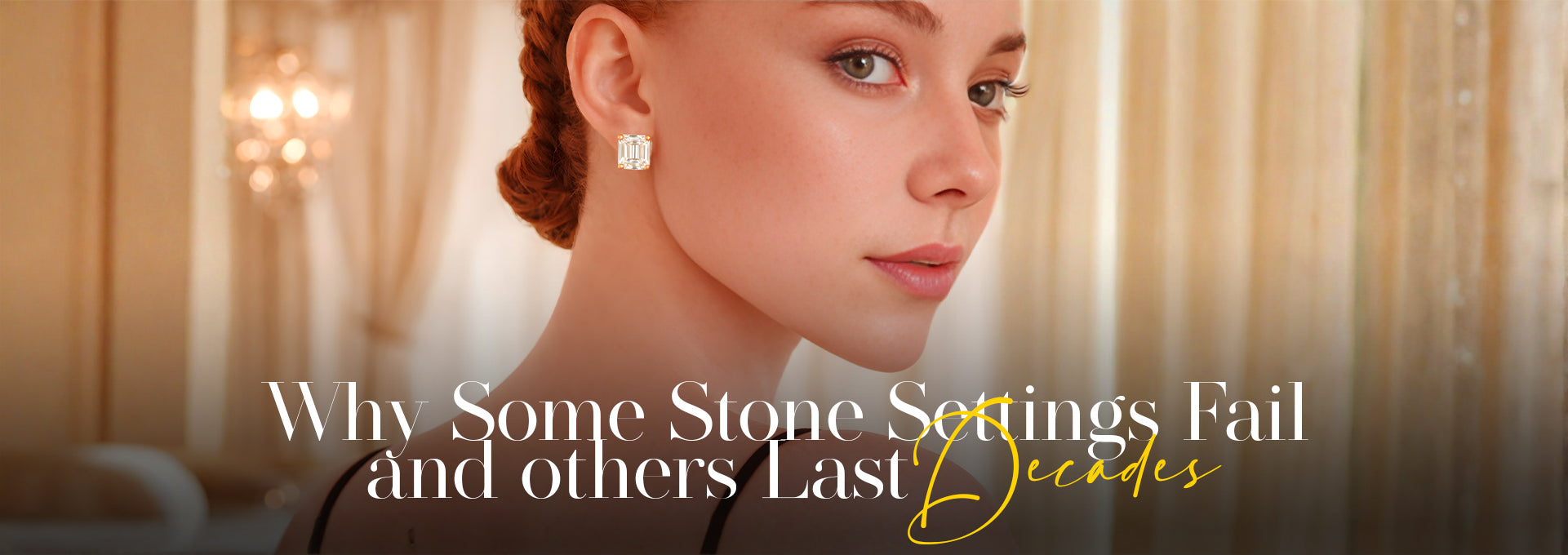
14K 4 Carats Emerald Cut Lab Grown Diamond Stud Earrings at $2,190 uses prong settings for substantial stones. 14K gold with 4 carats total weight lab grown emerald cut diamonds. Each prong must hold its stone securely while maintaining precise alignment. Quality construction starts with properly sized prongs. Too thin and they bend easily. Too thick and they overpower the stones visually. The right thickness provides security without bulk.
Prong settings need checking every 12 to 18 months for people who wear jewelry constantly. Jewelers examine prong tips for wear, test stone security, and rebuild or re-tip prongs before they fail completely.
Bezels Trade Sparkle for Security
Bezel settings wrap metal completely around a stone's edge. The rim presses down over the stone, holding it in place with continuous metal rather than individual prongs.
Bezels rarely fail. The continuous metal provides vastly more contact area than prongs. Stones can't work loose because there's nowhere for them to go. For active people or those who work with their hands, bezels eliminate the anxiety of checking prongs constantly.
The tradeoff is visual. Bezels cover more stone surface. Less light enters from the sides. The metal frame creates a distinct look that some people love and others find limiting.

Bezel Set 0.40ctw Diamond Hoop Earring in 14K Yellow Gold at $1,820 demonstrates bezel setting security. 14K yellow gold with 0.40CTW diamonds set in individual bezels around the hoop. Each stone surrounded by metal on all sides. The multiple bezel settings create security while maintaining the hoop design. Stones stay put because they're protected by metal frames.
Bezels work especially well for softer stones. Opals, pearls, turquoise. Anything that scratches or chips easily benefits from the protection bezels provide. The surrounding metal absorbs impacts that would damage exposed stone edges.
Channel Settings Hide Metal
Channel settings suspend stones between two metal walls. The stones sit in a groove with metal on either side but nothing visible between them. This creates a continuous line of stones with minimal metal showing.
Channel settings are secure when built properly. The stones support each other. The walls on either side prevent movement. But poor construction creates problems. If the channel is too wide, stones shift. If walls are too thin, they bend under pressure.
The setting style suits wedding bands and bracelets where you want continuous sparkle without exposed prongs. But it requires precision fabrication. The channel must be sized exactly for the stones. The walls must be thick enough to stay rigid.
Pave Settings Need Proper Execution
Pave settings use tiny beads of metal to hold small stones. Jewelers drill holes, place stones, then raise small prongs from the surrounding metal to secure each stone. Done well, this creates a diamond encrusted surface with minimal visible metal.
Done poorly, pave settings fail quickly. If holes are too large, stones sit loose. If metal beads are too small, they don't provide adequate grip. If the surface isn't flat, stones sit at different heights and some work loose.

14K Yellow Gold 0.82ctw Pave Diamond Link Earring at $3,000 requires precise pave work. 14K yellow gold with 0.82CTW diamonds in pave settings across linked design. Each small diamond needs individual attention. The metal around each stone must be raised uniformly. Quality pave work requires microscope precision and patience. Rushed execution shows immediately in how stones sit and how quickly they fail.
Quality pave work requires microscope work and patience. Each stone needs individual attention. The metal around each stone must be raised and pressed uniformly. Rushed pave work shows immediately in how the stones sit and how quickly they fall out.
Metal Hardness Matters
Setting security depends partly on metal hardness. Softer metals bend more easily under stress. Harder metals maintain their shape better but are more brittle.
14K gold balances durability and workability. It's hard enough to hold prongs rigid but soft enough that jewelers can work it precisely. 18K gold is softer, meaning prongs bend more easily and need more frequent maintenance.
Platinum is harder than gold but also heavier. Platinum prongs hold shape well. The density means platinum settings feel substantial. But platinum work requires different techniques than gold, and not all jewelers execute it equally well.

14K Yellow Gold Diamond Link Hoop Earring at $1,980 uses 14K yellow gold for the setting structure. 14K yellow gold with diamonds set in linked hoop design. The metal provides adequate hardness for secure stone settings while allowing the design flexibility needed for hoop construction. Yellow gold's properties mean settings maintain their grip through years of wear.
White gold is actually yellow gold alloyed with white metals like palladium or nickel. The resulting alloy is harder than pure yellow gold, making it popular for settings that need durability.
Stone Shape Affects Security
Round stones sit most securely in settings. The uniform circumference means even pressure distribution. Prongs grip consistently around the entire stone.
Fancy shapes create weak points. Marquise cuts have sharp tips that concentrate stress. Princess cuts have corners that can chip if prongs don't protect them properly. Pear shapes combine both challenges.
Settings for fancy shapes require thoughtful design. Tips and corners need protection. Prongs must position to shield vulnerable areas while still showing the stone attractively. Generic mass produced settings often fail at this.

0.92ctw Three Marquise & Oval Shape 0.65ctw Diamond Ring in 14K Rose Gold at $5,040 combines different stone shapes in one piece. 14K rose gold with marquise and oval diamonds totaling 1.57CTW. Each shape requires appropriate setting technique. The marquise stones need secure settings protecting their pointed tips. The ovals require even pressure distribution. Mixing shapes in one piece demands expertise to secure each type properly.
Long thin stones like baguettes are particularly vulnerable. They can crack along their length if settings apply pressure unevenly. Channel settings work well for baguettes by supporting the entire length.
Daily Activity Impact
How you live determines which settings survive. Desk workers who type constantly put different stress on rings than people who work with tools. Athletes face different challenges than people with sedentary lifestyles.
Consider typical hand use. Do you grip steering wheels, open jars, carry shopping bags, type on keyboards, exercise with weights? Each activity impacts jewelry differently. Rings take the most abuse because hands contact everything.
Settings need to match activity level. Active people benefit from lower profile designs where stones sit closer to the finger. Bezel settings or channel settings eliminate exposed prongs that catch and bend. High set solitaires with tall prongs are gorgeous but impractical for active lifestyles.
Setting Height Creates Risk
Higher settings look dramatic. Tall prongs elevate stones, creating impressive visual presence. But height creates vulnerability. Taller settings catch on everything. The higher the stone sits, the more likely it takes impacts.
Low profile settings keep stones close to the metal surface. They catch less, snag less, take fewer direct hits. The tradeoff is less dramatic appearance. But low settings last longer for people who wear jewelry during all activities.

14K Yellow Gold Lab Grown Diamond Huggie Earring at $1,260 keeps stone settings relatively low profile. 14K yellow gold with lab grown diamonds in huggie hoop design. The diamonds sit securely in settings designed for ear wear. Huggies take fewer impacts than dangling earrings but still need secure settings. Low secure settings prevent damage and loss.
Earring settings matter less for height since earrings take fewer impacts than rings or bracelets. But even earrings catch on clothing, hair, scarves. Settings should be smooth without sharp prongs that snag.
When Settings Fail
Settings fail for predictable reasons. Prongs wear thin and bend. Metal fatigues from repeated stress. Poor initial construction creates weak points. Impacts damage already compromised settings.
The warning signs are often visible before failure. Prongs look thin or uneven. Stones move slightly when pressed. Metal shows wear marks around settings. Regular inspection catches these signs.
Most stone loss is preventable with maintenance. Jewelers can rebuild prongs before they fail. They can tighten loose stones before they fall out. They can identify weak settings and recommend redesign.
The jewelry that lasts decades gets checked regularly. Settings get maintained before they fail. Problems get caught early when repair is simple and inexpensive rather than waiting until stones disappear.
Quality Construction From Start
The best defense against setting failure is quality construction initially. Well designed settings using appropriate metal thickness and proper technique rarely fail even with years of constant wear.
Quality shows in details. Prong tips finished smooth. Even metal thickness. Precise stone placement. Secure baskets under main stones. These details don't show in photos but determine whether settings last.

Three Row Diamond Ring in 14K Yellow Gold 0.89ctw at $1,930 requires secure settings for multiple stones. 14K yellow gold with 0.89CTW diamonds across three rows. Each stone needs proper setting that holds through daily wear. The multiple rows mean each setting must be executed correctly. Quality construction means these settings hold for years without stones loosening.
Cheap jewelry uses minimal metal in settings to reduce cost. Prongs are too thin. Bezels are too weak. The jewelry looks acceptable initially but fails quickly under wear. Quality jewelry invests in proper setting construction that lasts.
What Secure Settings Cost
Secure settings cost more than minimal ones. More metal, more labor, more expertise. But the cost difference is modest compared to replacing lost stones or constant repair.
A well set diamond costs perhaps 10 to 15 percent more than minimal setting work. That premium buys settings that last decades instead of months. It eliminates anxiety about stone loss. It reduces lifetime ownership cost through fewer repairs.

14K Yellow Gold Bezel Set 1.35ctw Diamond Bangle at $3,110 uses secure bezel settings throughout. 14K yellow gold with 1.35CTW diamonds each set in individual bezels. Bangles take constant impacts from desk edges, doorframes, steering wheels. Bezel settings prevent damage and loss. The investment in quality settings pays off through years of worry-free wear.
The best value is jewelry built properly from the start. Settings designed for how you'll actually wear the piece. Appropriate metal thickness. Quality fabrication. Regular maintenance when needed.
Stones that stay put for decades aren't lucky. They're secured in well designed, well executed settings that do their job properly. That's what you should expect from quality jewelry.
Ready to see jewelry with settings built to last? Visit our Beverly Hills showroom to examine construction quality in person, or explore our collection at TemiB.